By Zhiwa Woodbury, M.A., J.D.
“O monks, just as a goldsmith tests gold by rubbing, burning, and cutting before buying it, so too, you should examine my words before accepting them, and not just out of respect for me.”
Introduction & Background
Since I left the profession of conservation law in 2012 to study both ecopsychology and Mahayana Buddhism with the departments of East/West Psychology and Asian Studies at the California Institute of Integral Studies, I’ve researched and written a few influential academic papers on the topics of climate grief (Planetary Hospice (2014)) and climate psychology: The Climate Crisis & The Cosmic Bomb (2015); Climate Trauma: Towards a New Taxonomy of Traumatology (2019). (1) The sequence of those papers is not coincidental. The first one represented the processing of my own grief over what I painfully knew, from my extensive natural science, law and activist background, we were in the process of losing forever. I had the great good fortune of writing that paper, subtitled “Rebirthing Planet Earth,” for a class on Death & Dying with E. Alessandra Strada, Ph.D., while training and volunteering at Zen Hospice just a few blocks away (and going for refuge at the Asian Arts Museum in between those two venerable institutions). Only due to this intense personal processing was I subsequently able to comprehend, from a depth psychology perspective, how the obvious cultural trauma of the atomic age – including my own “nuclear family” (with a father exposed to Nagasaki) – led inexorably to the phenomenon of biospherically experienced climate trauma.
As indicated, all of this processing was accomplished within a spiritual container of Mahayana Buddhism, thanks to my own root guru’s introducing me to Buddhist psychology in various retreat settings, which eventually led me to enroll at CIIS, and the inspirationally brilliant tutelage of Dr. Steven Goodman, who was an eclectic yogi-saint in the same fine spiritual tradition at CIIS of Alan Watts. Because his loss is still deeply felt in both the academic and the Buddhist communities, I want to dedicate this paper to Dr. Goodman’s sterling example, which still resides like a wise trickster inside the minds of all those he inspired. If you were anyone ‘in the know’ in San Francisco during those stimulating times, you knew that Dr. Goodman held all his classes in the evenings to accommodate anyone who might choose to show up, sit in, and be entertained in the most intellectually stimulating ways – harkening back to the days of Gary Snyder and friends showing up for the lectures of Alan Watts. And like Watts himself, Dr. Goodman never disappointed, thanks to his improvisational brilliance backed by an encyclopedic knowledge of Western philosophy, literature, Buddhism, quantum physics, and popular culture.
The reason I am compelled to mention all this now is because, over the course of my decade-long studies, research, dharma practice, and Gaian advocacy, I ‘evolved’ (for lack of a more descriptive term) from activism, to ecopsychology, to panpsychology precisely because the two tracks of personal practice, psychology and Buddhism, merged into a singular praxis and perspective. That was developmental, not intentional. While ecopsychology advocates for putting ‘place’ at the center of the psyche, rather than ego, panpsychology (re-)integrates this ecological psyche into Gaia’s Psychosphere, in recognition of the now scientific fact that Earth is a living meta-organism, and that consciousness is an emergent property of complex living organisms (panpsychism). See, e.g., Intelligence as a planetary scale process, Frank et al. (2022).
After two winters of intentionally focused relationship with Gaia, first on a lake outside Yellowstone National Park and then on a mountain on Salt Spring Island, B.C., and while still in a long-term relationship with my yidam, White Tara, in tantrayana, it gradually became quite apparent to me that these were qualitatively one and the same relationship. Gaia’s sentience is an expression of Tara’s oceanic mind, or what Buddha himself referred to as the Bodhi-tao. Informed by that perspective, I was then able to synthesize all my thinking and praxis into a holistic model for a kind of ‘radical quantum panpsychology’ that I refer to more colloquially as Gaia Psychology (2024). With that paper, which I anticipate will gain even more currency over time than that of my prior contributions (2), my personal and public journey of mind begun 12 years earlier at CIIS was complete.
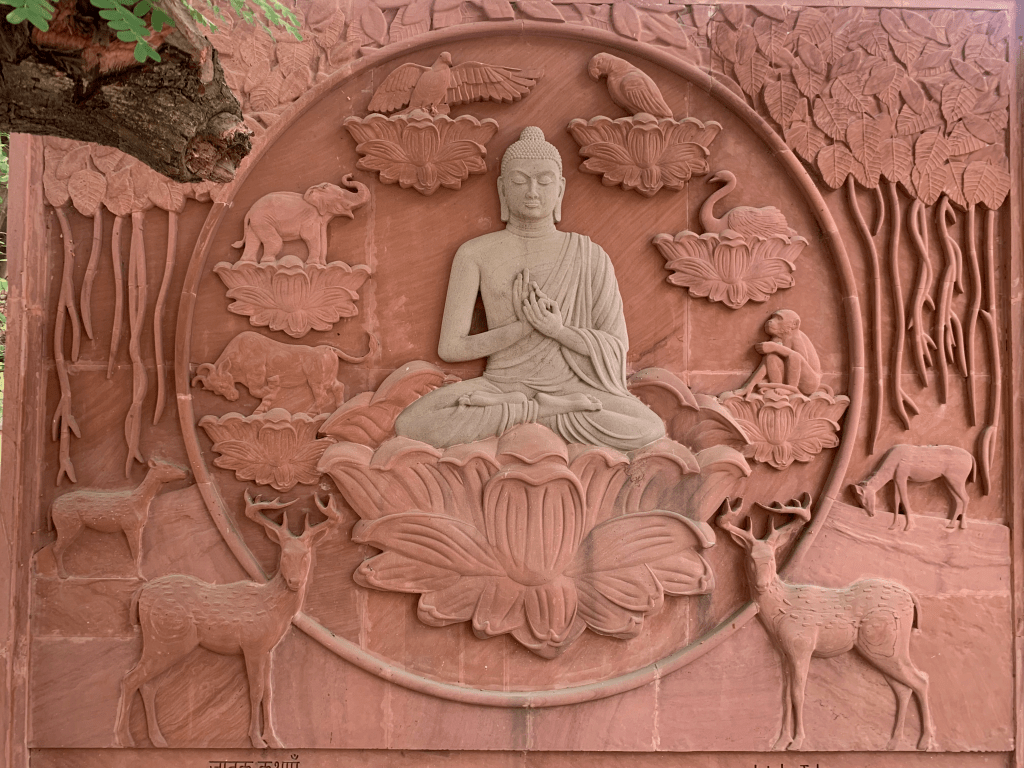
The world’s first quantum thinker and greatest psychologist of all time – Guatama Buddha – upon waking under the Bodhi tree and seeing reality-qua-reality for the first time through human eyes (e.g., nonduality of emptiness and form),contemporaneously acknowledged the sentient characteristic of the planet we are part of, going so far as to call on the Earth spirit, Prthivi, to bear witness to his newly elevated, fully integrated cosmic consciousness (as to the latter, see, e.g., Schlosser, U. “Richard Maurice Bucke and the Modern Study of Cosmic Consciousness” (2018), citing Buddha as the first exemplar). He was deemed “awakened” to set him apart from all other “enlightened” ones who had gone before him, including some of his own teachers. As at least one Buddhist scholar put it, Gautama awoke into the world imminently, rather than transcending it as with other yogis of his time. Instead of prescribing an escape from the world of sorrow and strife, the Buddha prescribed a remedy for all that ails us, encapsulated in the ethics of the bodhisattva, or spiritual warrior. His overriding concern was alleviating the suffering of this world, which he found to be tragically unnecessary. He thus referred to the heart of his revelation quite simply, and rather elegantly, as “true cessations.”
And so, when this 21st century buddhist panpsychologist, thinking he’d retired from the public sphere, first found himself sitting down under a sheltering tree in front of the stupa erected by King Ashoka to mark the place where the Buddha first turned the wheel of dharma, in the beautiful Deer Park at Sarnath in Varanasi, India, a distracting thought spontaneously arose:
Given the scale of human-produced suffering that characterizes the meta-crisis, threatening an ignominious ending of all higher life forms within Prthivi’s (Gaia’s) body – an unimaginable kind of suffering – how would the Buddha have cast his Four Noble Truths today, upon awakening to this new reality?
Like “a goldsmith tests gold” (supra.), I made the bold decision in that instant to test the modern veracity and relevance of the Buddha’s pronouncement on that very sacred ground. But not on my own, of course. I was, after all, sitting under a tree, and so the whole Earth was supporting me in my inquiry. I’d learned over the previous two winters, at least, to converse freely and directly with Gaia in this direct way of knowing, or gnosis, which I have found to be commonly reciprocated by the reception of nondualistic (i.e., direct) transmissions.
The answer was immediate, spontaneous, and relatively unfabricated. It entered my quiescent mind holographically, as an encoded percept that reflected the whole conceptual framework being transmitted. The first noble truth of the climate crisis, I realized in that moment, had to be the Truth of Trauma. From there, the remaining truths were self-evident: the causes of our trauma; the prospect of true cessations; and, the path of reparations. While I certainly understand that most in the academic world will find this methodology of subjective empiricism to be lacking in what is traditionally considered to be indicia of reliability and scientific rigor, what I am counting on is that regard for my prior contributions to the field will at least allow the reader to suspend disbelief for the purpose of examining this working hypothesis for remedying our collective dysfunction and debilitation from the standpoint of collective psychology, in stark contrast to the Buddha’s original focus on individual pathology and psychology. Buddha’s Dharma has stood the test of time. By closely hewing to the spirit of those psychospiritual maxims, I trust that these updated truths will prove similarly efficacious.
And so with that as prologue, and humbled by my regard for the relative infallibility of the Wheel of Dharma as handed down and rigorously debated for over 2500 years, I present here the Four Noble Truths of the Climate Crisis, as transmitted to me and contemporaneously transcribed in the resonant terra firma of the Buddha’s awakening and teaching. I hasten to add that were our present situation not so dire, there is no way I would ever take the heretical risk implicit in this act of academic publication. Then again, Buddha himself encouraged this kind of searching inquiry, and attachment to reputation is just one of the eight worldly concerns he instructed us to renounce.
It goes without saying that I do not speak for Buddha or Gaia; but, I am nonetheless sufficiently informed and inspired by both.
- The Truth of Trauma
While trauma has been a feature of human experience since Cain and Abel and, more systemically, the epic of Gilgamesh, it has quite abruptly metastasized into a global biospheric malady, wreaking mayhem on the entire planet, over just the last century. This is primarily due to three simultaneous, symbiotically unnatural force multipliers:
- the advent of industrialized warfare against humans and nature, including the Holocaust, factory farming, industrial fishing, over 2000 detonations of nuclear bombs, each more powerful than those dropped on Japan at the end of WWII, and continued ecological and biological warfare as byproducts of war industry;
- exponential population growth, both human and bovine, to the extreme detriment of all other species of fish and wildlife; and,
- the perverse and pervasive spread of man-made petrochemicals (“Better living through chemistry!”) into every sphere of this living planet, including most recently: water soluble insecticides in fetuses that coincide with steep rises in neurodivergence; micro-plastics in blood and breast milk; and, nano-plastics penetrating our brain cells. (It is estimated that the average American already has the equivalent of five bottle caps in their brains.)
These are all undeniably shocking developments considered separately, and taken together, collectively traumatic.
As a proximate result of these developments in the human condition, and roughly over that same time span, the suffering of trauma has rapidly progressed from a pervasive individual phenomenon that called forth the field of psychology in the first place, at the end of the 19th century, to what has now become a collective human and planetary condition, one that far surpasses, subsumes, and is triggering all other forms of collective and individual trauma. It is a planetary condition because this superordinate form of trauma is not confined to the the human race. That is the actual meaning of the Anthropocene, apart from any academic arguments, which is actively displacing the 11,000 year Holocene Era that was characterized by its mild climate, supporting both human civilization and biological diversity. It is global climate trauma, in other words, that has given rise to the Anthropocene, and if left unresolved – a very big ‘if’ – all higher life forms would likely disappear from the face of the Earth, rendering Gaia a much simpler, less beautiful and less intelligent organism spinning through space, waiting for the next comet to strike and impregnate her a million or ten million years from now.
That is the noble truth of trauma. It is ‘noble’ in the sense that it carries with it the potential to awaken the human species.
Researchers now recognize that “there is a mutually reinforcing relationship that connects climate havoc, climate trauma, and social inertia.” See: Engstrom and Krings (2025). While we are presently trapped, collectively, in an initial fight/fright/flight cycle of unresponsiveness to climate trauma and unresolved generational trauma, which has manifested as a dissociation syndrome, in time natural forces can be expected to bring the human species to heel. Consistent with Nobel laureate Ilya Prigogine’s theory of dissipative structures, in the midst of all this anthropocentric chaos we are stirring up, human systems of organization could quite suddenly and unexpectedly crystallize into a new transhuman order, re-birthing Earth in the process as well. (3)
In spite of all the understandable fears engendered by its vast potential, the advent of artificial intelligence may prove to be the start of that transmutation process. (4) Already, it is giving us the ability to converse with other highly intelligent species, which could soon change the way we think about ourselves and our place in the universe – depending, I suppose, on what the whales have to say to us. As we ponder the possibilities of this interspecies conversation, and as researchers compose their questions in advance, we would be well-advised to remember that Cetaceans brains actually display more encephalisation and have one more lobe than human brains – the paralimbic lobe. They’ve been evolving under the waves much longer than we have been on the land, after all. I think it would be natural to presume that they have a more direct line to Gaian intelligence than even Indigenous humans have. We may well find a superior intelligence once this conversation is fully enabled, and it may be no coincidence that whales have more potential to sequester carbon from the atmosphere than any other species on Earth. (5)
Of course, unlike climate modeling, there is no methodology for anticipating what form such quantum re-organization might take, and there really are no precedents in the history of civilization during the Holocene Epoch. The abrupt dislocations that are already becoming a feature of global warming (see, e.g.: Alpine glacier collapses engulfing Swiss village), the potential for corresponding abrupt population decreases and mass migration, the inability of climate models to account for Gaian homeostasis, and the inherent unpredictability of what might serve as a catalyst for crystallization at such a global scale – including but not limited to systems collapse, which could end up spurring regeneration of natural systems, something we caught a glimpse of at the start of the COVID pandemic – necessitate great uncertainty as the core characteristic of the Anthropocene. None of this should prevent humans from taking corrective and ameliorative actions, however. We are, after all, an adaptive species above all else. We just haven’t proven ourselves very capable of adapting in the present based on likely future outcomes, much to our great disadvantage. That, too, could suddenly change, given the prospects for quantum social change in a newly wired, interdependently arising world. In fact, unexpected change is the only thing that seems certain about the future prospects of humans and Earth.
When people really learn to appreciate the full extent to which trauma is shaping these likely outcomes and inhibiting our ability to rationally respond, let alone defining our present spheres of experience, then trauma will go from being a taboo subject, with its “history of forgetting” so memorably documented in Dr. Judith Herman’s seminal study Trauma & Recovery, to being one of our main topics of concern, conversation, and social relevance. In fact, this is already beginning to transpire. As the Austrian mystic Thomas Hübl, whose own journey began on an extended spiritual retreat, points out:
“[A] great deal of human suffering exists because of the denial of the past and an inability to acknowledge and integrate it. But when the decision is made to finally look at and feel the past, everything shifts… Every one of us who is working to help others [becomes] the embodiment of the self-healing mechanism of humanity. We [can then] each play a part in activating the global immune system.” Healing Collective Trauma: A Process for Integrating Our Intergenerational and Cultural Wounds (Sounds True, 2020).
The advent of trauma-informed journalism may well prove to be the most efficient means for accomplishing this social transformation, since the mere act of acknowledging trauma with awareness of its influence has the salutary effect of disempowering it, and at the same time informs effective responses to disruptions and conflicts. The social taboos surrounding trauma, by contrast, perpetuate trauma’s secret power over human behavior, and have arguably enabled the rise of authoritarianism that preys on the most traumatized elements of society by manipulating their dissociative states with effective emotional proxies, such as casting the victims of global warming as threats, and pretending for example that bolstering border security is more effective than addressing global warming itself. Refusing to acknowledge climate trauma creates a zero sum game in which everyone loses. Journalism is the best hope for shining a light on the cooperative energies and collaborative efforts that can be unleashed by acknowledging trauma’s pervasive role in the world’s worsening problems.
The Two Truths of Trauma. Given how my paths of buddhist studies and climate psychology have merged into pan-psychological praxis, it is important for me to point out here that the first truth of trauma is actually two truths, from a dharma-informed perspective, because there are essentially two primal sources of trauma at play in the phenomenology of human experience: somatic/epigenetic trauma; and, psychophysical/predecessor trauma. The first is the trauma each of us carries forth into the world. Because life begins with the trauma of childbirth itself, because unresolved generational trauma is written into the genetic code we receive from our fathers, and because our bodies store traumatic experiences that our psyches are unable to process – such as being physically abused as children – there is not a single human being on Earth who does not carry trauma around in their body. We know this to be a matter of somatic memory. As Bessel van der Kolk’s best-selling book puts it, “the body keeps the score.”
But what of the mind?
Pscyhophysical trauma is generally not acknowledged in Western society. Owing to our dominant scientific-materialist worldview, we have no problem identifying with our genetic ancestors. I myself carry the genetic expression of my father’s wartime experiences in the Philippines and Nagasaki. But the lesson I learned firsthand from training and serving at Zen Hospice is that we are not our bodies. There is overwhelming empirical evidence (2500 cases over the past 50 years from Univ. Va.’s School of Medicine) to back up the assertion that we come into being as a confluence of the body we inherit from our parents, and a mindstream that enters the ovum, either at the moment of conception (with an observable flash of light) or at some developmental point thereafter. There is also good empirical evidence at the other end, from the study of clinical near death experiences, that the human mind is a nonlocal phenomenon, with the brain acting simply as a transceiver.
The continuity of our mindstream explains not only our tendencies (e.g., why identical twins have different temperaments, etc.), it also carries the imprints of significant traumas from prior lives not associated with our current bodies, especially what in prior lives proved to be fatal traumas. Indeed, the most convincing cases of children remembering past lives involves tragic endings to those lives (e.g., the case of James Leininger). See generally, Tucker, J. Life Before Life: A Scientific Investigation of Children’s Memories of Previous Lives (2008). It is also not unusual for adults who become skilled practitioners of meditation, and who loosen the grip of reified selfhood, to recall their prior lives. I personally experienced this at age 43 after receiving a transmission from His Holiness the Dalai Lama of the Heart Sutra, together with a Medicine Buddha Wang (jénang), or empowerment.
Going from the nine-day Heart Sutra teachings and empowerment directly to a nine-day silent retreat, I experienced an unprecedented level of mental quiescence, where the proliferation of thoughts naturally subsided. Then, sitting next to a stream listening to the water, quite suddenly and unexpectedly vivid memories surfaced in my mind from the end of my previous incarnation in Tibet, at the hands of two young members of the Red Guard. This was quite a shock, as you might imagine in that peaceful context, but armed with the knowledge of how to work with memory from a prior teaching, I was actually able to utilize my newly surfaced memories to access this common mindholder’s prior, recent memories – just as if they were my own. The insights I gained from that access proved to have a clarifying effect on my spiritual path, giving me a much broader perspective on my life, and opening up deeper levels of the mindstream – or “tantra” (literally, thread of continuity from one life to another) – that I inhabit with this body, in this incarnation. Prior to that experience, I was quite skeptical of the idea of reincarnation. Thereafter, however, it became received knowledge for me in much the same way I know this body comes from my parents, even though I don’t remember them giving it to me.
As already noted, trauma draws its power from our failure to acknowledge its presence and recognize its influence. Therefore, I am compelled to share this personal insight, for if we are eventually to fully and skillfully address the truth and consequences of trauma, it is important to be thorough in acknowledging its sources. Simply stated, trauma is stored in both our bodies and in our psyches. It is carried forth by our genes and by our psychic imprints. The more we understand and appreciate how it is stored, the more empowered we will be in seeking and rooting it out. And, at least at the level of the collective, root it out we must. That imperative is self-evident in light of current and recent world events. Were it not for the melting polar caps, a Titanic metaphor might seem appropriate here. We must change course.
2. Cause & Effect: The Truth of Karma
So if everyone carries trauma, and if these traumas are the source of all suffering in the world, if they’re the real troublemakers in our midst, then it behooves us to know how trauma arises in the first place. Think of it as spiritual epidemiology: to understand a course of treatment, it is instructive to know the causes and conditions giving rise to the malady. How did we get into this situation? What is the common thread between different kinds of trauma? And, why do we tend to perpetuate trauma at both the individual and collective levels?
Believe it or not, the answer to these vexing questions is not all that complicated. Trauma is caused by our dissociation (dis-association, or uncoupling) from Nature and, concurrently, from Human Nature. I do not believe this to be reductionist in the least. (6) It is more a matter of applying Occam’s razor. It’s the simplest explanation. Our natural state is relatively free from trauma, like a newborn babe in perfect psycho-spiritual symbiosis with its mother. This natural state could even be characterized as a state of ‘love,’ or wholesome communion with others and our environment.
Such a universal love is actually viewed by mystics as permeating all contrary and complimentary appearances. It’s always there, in other words, like a light of origin lurking just beneath the surface of apparent phenomena. It is the life-source in the participatory (non dual) perspectives of relatively unaffected, nature-based (indigenous) communities; it remains accessible to any of us under conditions of natural immersion (e.g., wilderness excursions, plant medicine journeys, or just meditating in natural settings); and, it can be also be directly cognized with the assistance of medicinal plants consulted within an appropriate spiritual container.
To whatever extent we have allowed ourselves to become dissociated from this natural state, to that same extent we are unable to perceive it. We will even erect active barriers (e.g., self-protective boundaries) to this benevolent reality when it threatens our most cherished identities and the stories that we tell ourselves about ourselves – our personal myths, which often go unquestioned. Obviously relevant examples are the cowboy myth, by which the natural inhabitants (wolves, prairie dogs, beavers, etc.) of the land being ‘tamed’ are ruthlessly eliminated in favor of commodified ‘stock’ animals; and, more generally, the related individualist myth of the modern age. This myth of the individual, in turn, depends on various discredited myths, such as social Darwinism (competition, not cooperation), race theory (as if we are not all genetically united in one common ancestral tribe), scarcity (zero sum mentality), and Cartesian dualism (reification of self in opposition to all that is other). These tired old myths continually undercut our human nature, and need to be vigorously discarded.
I find it illuminating that the literal meaning of ‘dukkha’ – more commonly translated as ‘suffering’ – is ‘contraction.’ Psychologically, when we feel our identity is threatened, we reflexively contract around our wounded sense of self – also known as “emotional reactivity – imagining it to be uniquely us, and thus worthy of defending. At the collective level, we call this nationalism, which almost always is grounded in unresolved generational trauma. This just happens to be the basic trauma response of our parasympathetic nervous system as well. When our unresolved traumas are triggered, we can either acknowledge them and become reconciled with them, or we can contract around any of the various fight, fright or flight syndromes.
This reflex vs. reflect/react dichotomy is the common wellspring of both buddhism and psychology. The tragedy of human existence is that we shield and protect the very deep, emotional wound(s) that perpetuates our suffering! Collectively, this is the purpose of taboos and social norms that proscribe what is acceptable and/or appropriate to discuss in different contexts. As the Indian Buddhist sage Shantideva observed more than 1300 years ago, we humans hate suffering, but love its causes!
“For beings long to free themselves from misery, but
misery itself they follow and pursue.”
When we act against our own true, or ‘better’ nature (7), and/or when we act out in derogation and destruction of Nature herself, this creates the cause and the conditions for trauma to arise in our field of experience and shared experiences. If we are ill-equipped to integrate it in the moment, as we observe in nature with the predator/prey relationship where trauma is literally shaken off, it becomes lodged within, and obstructs, the (in)formational feedback loops that govern our relational and behavioral patterns. It becomes a kind of stored code that must await recovery and resolution at a future time when we are better equipped to process it.
Unfortunately, trauma is both chronic and cumulative. Traumas tend to pile up, leading to greater and greater dysfunction, which can then have the effect of dissuading us from ever getting around to recovery and resolution. So we continue acting out. And this is true at both the individual and collective levels. It is only when it reaches the level of a crisis that we find ourselves left with no choice but to act on our trauma or suffer its intolerable consequences. These crises represent times of either breakthrough or breakdown; or, quite often, breakdown followed by breakthrough. Collectively, in response to climate trauma, we seem to be following this latter path. However, our collective traumas have accumulated to such an extent of intolerability that the generation of children today are unwilling to allow their parents’ generation to pass this traumasphere on to them via a culture of denial and apathy, giving rise to the unprecedented phenomenon of children as political activists.
This is not normal! And as psychologists, we are morally obligated to call it out on behalf of those children, for future generations, and for non-human life as well. These traumas need to be acknowledged, and who else is in a position to advocate for such a social reckoning?
The truth of the matter, then, is that trauma is highly unnatural. It is opposed to both life and natural evolution. We all know this to be true at the level of our intuition. For example, it is not natural for an adult, or a priest for that matter, to sexually offend a child. Nor is it natural for a child to torture an animal. It is also highly unnatural for one human being to kill another. We came up with a whole bible to explain that one! If killing one another was such a natural act, as with predator and prey, then there would be no such thing as “perpetrator trauma,” and soldiers would not come home from killing fields with PTSD.
Trauma is our signal that we have violated nature, or are even committing crimes against nature. While it may not be unnatural for a human to cut down a tree for shelter, for example, it is highly unnatural to clearcut a forest (traumatizing e.g. orangutans), damn a mighty river (traumatizing e.g. anadromous fish), or level an entire mountain (traumatizing local communities). And it is important to recognize here that unresolved trauma includes perpetrator trauma, which can also be collective. Digging up all the fossil fuels in the world and burning them at a highly compressed timescale? Unnatural. As is filling the oceans and biosphere with plastic. There is nothing natural about that. It is not “in our nature” to do these things. They are invasive and traumatic by nature, almost by design, as is factory farming and clearing rain forests to grow grains for those factory farms – grains to be mixed with antibiotics (clue here: anti-biotic feedstocks). This is not rocket science. Speaking of which, it goes without saying that attempting to assert control over the basic forces of the universe, as with atomic bombs and nuclear power, is trauma-inducing at scale. As with the nuclear age, the entire petrochemical age, foisted on us to repurpose chemical weapons at the end of WWII by the very same military-industrial complex Eisenhower tried to warn the world about, and Kennedy tried to stand up to, is also unnatural and chronically traumatic at scale.
In the reflected light of this discussion, the clarifying lens of trauma-informed reasoning comes into sharp focus, like a sociocultural Hubble telescope turned towards Earth, revealing its great potential for addressing all of our social ills. This, then, is the second noble truth. Trauma is both cause and effect writ large, not unlike the way a mind-moment in Buddhism is the effect of the previous mind-moment, and the cause of the next. Unresolved trauma is both chronic and cumulative, lending itself to a cohesive social narrative that allows us to make sense out of what otherwise would appear to be chaotic and random:
“[A] trauma-informed research approach can help researchers and participants identify hegemonic beliefs, attitudes, and behaviors that contribute to the Earth’s destruction. These include dominant beliefs about modernism, individualism, and capitalism that are embedded in structures, policies, and discourses that pervade our everyday lives. With a clearer understanding of how these hegemonic beliefs manifest in individual routines as well as political, economic, and social structures, participants are better able to critically question and challenge or replace them with a belief system that centers an ethic of care (IPBES, 2024).”
Engstrom & Krings, “A Framework for Trauma-Informed Climate Research: Interrupting the Relationship Between Climate Trauma and Social Inertia” (2025). The same is true for “trauma-restoring journalism,” as former Financial Times reporter Matthew Green is actively asserting. Unresolved collective traumas hold immense potential energies that can be skillfully released in salutary ways for addressing the meta-crisis.
Trauma & Karma. What we in the West have, reluctantly, come to know as trauma, in the Orient has always fallen under the more general purview of karma. Actions have consequences at all levels and without fail, and the longer destructive actions fester, the greater the consequence. When those actions are unnatural, such as anger (based on exaggerating faults when the mind of attachment does not get what it wants) and violence (based on emotional reactivity), there is a severe kind of rupture (zhigpa) in our mindstream – or culture – that ripples out in our lifestream – or society – and, especially if repeated, as tends to happen with the compulsion to ‘act out’ unresolved trauma, these harmful actions give rise to patterns of behavior that bring ‘results similar to the cause’ (karma terminology) in our future experience of the world. In other words, unnatural actions create fields of trauma, or karmic propensities, that we then inhabit and perpetuate based on the dysfunctional responses that come from not respecting karma and/or not acknowledging trauma’s role in the unfolding of events we pretend we have no control over.
“By the turning of this wheel, karmic suffering repeats, and trauma is transmitted from one generation to the next — until it finds space and presence and clarity; until it is owned so that it may be healed.”
Hübl, T. Healing Collective Trauma: A Process for Integrating Our Intergenerational and Cultural Wound(Sounds True 2020).
This simple truth holds the key to our survival and the regeneration of life on Earth. Not acknowledging unresolved trauma empowers it at our expense. Until we own it. Shining light on trauma, by contrast, empowers us with the kind of agency that is sorely lacking on the world stage right now in the face of these multiple existential threats.
3. The Truth of Reconciliation: True Cessations
Since trauma has a cause, it can be resolved. This is the third noble truth. One might even argue that this is the very reason for our existence. Resolving trauma is naturally redemptive, imparting meaning to human experience. I’ve watched this play out repeatedly in hospice settings, where a lifetime of painful relationships can be released with simple acknowledgment of trauma and its discontents, unleashing the pent-up energy of genuine regret, which in turn gives rise to the final, redemptive stages of grief: acceptance and meaning. See: Kessler, D. Finding Meaning. Scibner (2019). Trauma blocks our ability to experience universal love, while resolving trauma releases that natural flow of connectivity we call love.
Of course, we don’t have to wait until we are on our deathbed to experience this reconnection. People’s lives are regularly transformed by resolving traumas at crisis points. But from the standpoint of biospheric trauma, especially in consideration of the web of life on this planet, we already find ourselves in a hospice-like setting. Life as we have always known it is ending. That was the whole point of “Planetary Hospice” (2014). By not just thinking of ourselves, it becomes undeniable that we’ve triggered a great extinction event, and the future of life on planet Earth looks very different today than it did even a few decades ago. At the same time, Gaia is incredibly resilient when we enlist her as an ally instead of treating her as our enemy, and redemption is still within our grasp. We may not be able to stop the seas from rising, but we can reverse global warming and change the trajectory of life on a transformed planet.
As revealed in his Red Book, published 50 years after he passed away (2012), Carl Gustav Jung believed that the dead are more alive than the living. At the moment the mind separates from the body, according to Jung, it is revealed to us how often we acted in derogation of life, against our better nature, and our afterlife then becomes consumed by regret. Because of this, the dead – who will always outnumber us by a lot – are constantly seeking redemption through the living. This is what Jung meant by the dead being more alive than the living, especially when our lives are hobbled by repression and an atmosphere of oppression. The dead speak to us internally with psychic force, though we tend to think it is our own thoughts that we’re hearing.
Whether literally true or not, this is a great way to think about generational trauma. As the poet John Glenday puts it in his haunting poem (Walkers) about the war dead returning home:
“Forgive us for coming back. We didn’t travel all this way to break your hearts. We came to ask if you might heal the world.”
Broken relationships can and must be repaired. This is true at the level of the individual (see, e.g. 12-step programs based on Jung’s advice to A.A.’s founder), the family unit, in our tight-knit communities and, even more so, at scale: the level of the collective reflected in what Jung called the unconscious, those archetypes that animate our waking consciousness. In other words, the meta-crisis that defines our age is a spiritual crisis of broken relationships awaiting redemption. There is no other effective, salutary way to think about it. We exist within, and are hobbled by, the cumulative rubble of broken relationships and social ruptures that have been greatly exacerbated by the industrialization of civilization and warfare. Fortunately, these are all still relatively recent developments for which corrective measures clearly exist, if we can just collectively come to our senses! See, e.g.: “Global Deal for Nature” (2019); “IPBES Transformative Change Assessment” (2024).
And that’s where the Third Noble Truth of the Climate Crisis comes into play. We are called to come back into proper relationship with ourselves, first and foremost, due to our acquired, dissociative states; with our close others, commensurate with the harm we’ve caused by not being there for them; with and within our own relevant communities, which becomes a kind of psychosocial force-multiplier; and, concurrently, with Earth – beginning at the ecosystemic level, or even in our yards and gardens, and then naturally rippling out into our bioregions and into Gaia’s larger spheres. “Proper relationship” here means quite simply that which accords with nature. Nature is what defines universal values when facing existential threat. It is now an accepted truism that we are part of Nature, not apart from it, that Earth is our life source, not a resource, and those core values describe the paradigm emerging from the ongoing integration of quantum thinking and Gaia theory.
Even though we always have to begin with ourselves, as the nominal referent point for all our relations, this is not really a sequential process. Because, for example, what we tend to think of as our ‘selves’ is, in reality, full of everything that we mutually depend on. As the Lakota way teaches, when we really look within, what we discover is all our relations. That is the beauty of Native American wisdom – it is relational in contrast to the West’s tendency to be reductionist and, for lack of a better term, ‘isolational.’ This is also what Buddhism means by “emptiness of self”: not that the self doesn’t exist, as is commonly misunderstood; rather, that it is empty of not being full of all that we tend to label ‘other.’ It emerges interdependently and contemporaneously in that symbiotic psycho-physical sphere of all our relations.
This relationality is the crux of the paradigm shift we are being compelled to undergo by the cumulative force of unresolved trauma. Heretofore trapped by scientific-materialism in our own particularist way of thinking about ourselves and our ‘environment’ (vs. ecology), we are now being asked to collapse the quantum wave of organismic relations. For we do not exist in isolation, within a cold universe. Instead, we exist as fractals in a larger natural, implicate order – totally interconnected, interdependent and effectively interpenetrating, as all mystical and shamanic traditions have always known. Consider what we’ve learned from science in support of this emergent worldview: e.g., that every atom of hydrogen in our body comes from the birth of a star somewhere in the cosmos, while every atom of oxygen comes from the death of a star; and, that the carbon we release with every exhalation reaches every living plant on Earth within one year. That’s how enmeshed we are with life, death and regeneration in the various, concentric spheres of the cosmos.
This could also be called the truth of reciprocal relations, as Robyn Wall-Kimmerer speaks so eloquently to. Coming into proper relationship is a multivalent process of healing, or becoming whole again, from our current, fragmented states that society has tended to deem “normal” and “productive” in obeisance to the industrialized technosphere. This quantum Gaian paradigm shift has the potential to save all life on Earth. That is not hyperbole. And that is the Third Noble Truth of Reconciliation. All that is left is to point out the path forward out of our shared crisis, the way to reconcile ourselves with all our relations.
4. There is a Path Away from Trauma: The Noble Truth of Reparations
Stated simply, reparations are how we come into the proper (holistic) relationship and resolve the climate crisis. While the idea of reparations, like reciprocity, is nothing more than a law of nature at its core, it has come to take on significant political ramifications in the United States due to an underlying current of racial animosity in our culture that often takes the form of resentment, if not blatant and historically deaf white entitlement. Thus, it is instructive here to consider, by way of poignant illustration, the case of genocide. Because it is not possible to come into proper relationship at the scale of planet Earth without honestly and genuinely seeking to address the residual repercussions of entangled crimes against humanity, from our recent past, and (related) ongoing crimes against nature. One of the main reasons we’re struggling to come into proper relationship with the natural world, which we can only do in cooperation with one another, is because we’re still stymied by these improper relationships with one another.
For example, how are we, the dominant cultures perpetrating climate trauma at a planetary scale, to come into proper relationship with those peoples and cultures we’ve committed genocide against without inquiring of them how we might help them repair their broken cultures and lifeways? Because the real ‘inconvenient truth’ is that we can not come into proper relationship with Earth apart from Indigenous peoples, including but certainly not limited to Native American Tribes and First Nations here on Turtle Island.
Closely related to this inconvenient truth, how is the Global North to come into proper relationship with Earth without coming into proper relationship with the Global South, which we have relentlessly exploited, and who are suffering the worst effects of climate trauma even though they’ve contributed the least to global emissions and extinctions?
It is only by ignoring these questions and imbalances that we are able to pretend justice requires walling climate refugees from the Global South off from entering the very countries responsible, in large part, for the suffering conditions they are fleeing. The ‘developed’ world’s obsession with ‘border security’ is a direct repercussion of the immense and unconscionable traumas unleashed on the globe by The Discovery Doctrine, which doctrine was effectively imprinted on our national psyche here in the U.S. by Supreme Court Justice Joseph Story.
Justice Story served on the high court for over three decades, and was renowned for his Commentaries on the Constitution of the United States (1833). In that legal treatise, he set forth the overtly racist rationale for the Supreme Court’s seminal ruling on Indian Law a decade earlier:
“The Indians were a savage race, sunk in the depths of ignorance and heathenism… They were bound to submit to the superior genius of Europe… The Papal authority, too, was brought in aid of these great designs…” (emph. added)
Story is referring here to a 1493 Papal Bull issued, he says, “for the purpose of overthrowing heathenism, and propagating the Catholic religion.” It provided moral authority for taking possession of the “new lands” from their inhabitants, which of course is codified in property law and title to this day.
The “superior genius” Story boasted of included: the immoral abomination of slavery, a slow-motion holocaust that lasted four centuries; mass genocide of tens of millions of the inhabitants of Turtle Island, yet another government-sanctioned holocaust; and, the mass extinction of wildlife species, including exterminating 60 million buffalo, in favor of cows on public lands and, after WWII, in factory farms. This self-professed ‘genius’ has culminated in an existential threat to the future of all life on the planet. How can something that is anti-life be considered superior to what is natural, including peoples living harmoniously with nature, and all of creation itself? We have still not ‘owned’ this horrible mistake.
The Catholic Church cited to by Story has fared no better – as we’ve become painfully aware of in recent decades – and is only now beginning to atone for the many sins it committed in the name of superiority, in the name of God, including the cultural genocide of border schools for Indigenous children ripped from the bosom of their families and beaten into submission, only to be killed and buried in unmarked, mass graves. MONSTROUS! And yet this smug attitude of superiority still finds a place in the insidious notion of “American Exceptionalism,” or MAGA’s perverted American Dream of turning back the clock to the time of robber barons and Jim Crow, a dream wielded menacingly as justification for the continuing exploitation of the Global South, Indigenous peoples, and nature itself. This ugly Americanism has perhaps found its greatest champion ever in Donald Trump, who openly admits that his favorite president was Andrew Jackson, popularly known by the moniker “Indian Killer” in his own time.
Trump and trauma are practically synonyms. He has risen to prominence at this particular time for a reason; that is, he embodies the collective shadow of corporate colonialism, and preaches the denialist doctrine of Christian nationalism. His otherwise inexplicable prominence forces us to look in the mirror and to come to terms with ourselves and our sordid past – or be consumed by it. It is most unfortunate, but at the collective level this is often the kind of crisis that is required before unresolved traumas can be faced.

The traditional ecological knowledge and natural lifeways of those “heathen savages,” meanwhile, are now widely viewed as the true “superior genius.” According to both conventional science and international consensus, it is needed now more than ever in addressing the existential threat that our settler culture is responsible for creating with its clearly inferior lifeways and hypocritical, deadly morality. Racism is not, after all, a true religion, whether you label it as white supremacy, a discovery doctrine, or the prosperity gospel. In fact, it is the very opposite of religious and spiritual sentiment. It is darkness, not light, based on ignorance, not reason. The idea of different races of humans is itself a colonialist construct, since skin color is nothing more than an indication of how far a splinter tribe settled from the equator.
Simply stated, people of European descent bear a disproportionate share of the blame for the climate crisis, and the disparate impacts of colonialism and climate racism calls for meaningful climate and cultural reparations. This is what it would mean for us to grow up and “own” the trauma of the biosphere that we have perpetrated, unwittingly or not.
Consider:
“The fact is that we live in a world that has been profoundly shaped by power. Differentials of power between and within nations are probably greater today than they have ever been. These differentials are, in turn, closely related to carbon emissions. The distribution of power in the world therefore lies at the core of the climate crisis.”
~ Amitav Gosh, from The Great Derangement (2016)
“[C]olonialism’s legacy is evident in every scourge, be it a viral pandemic, climactic events, police violence or exposure to environmental toxicity such as the ongoing water crisis in Flint, Michigan. The task ahead of us is to heal the legacy wounds of genocide and slavery which we now see yawning open and festering before us.”
~ Marya, R. & Lindo, E. “Healing the Nations Broken & Scattered Hoop”
Conclusion
Climate trauma is killing us. It is an existential threat to all higher life forms on planet Earth, and is an unnatural byproduct of the industrial and petrochemical age that has given rise to the Anthropocene. We can begin the decades-long process of resolving climate trauma by first acknowledging its superordinate character and its pervasive effects, and then by exposing its relatively recent and, in many cases, ongoing historical causes. Since traumas are only capable of resolution in the context of the relationships in which they arise, climate and cultural reparations, designed in cooperation with Indigenous peoples, represent the path of reconciliation for climate and cultural traumas, both amongst ourselves and with the natural world. Healing our collective and generational traumas has vast potential for unleashing regenerative energies, especially in alliance with Gaia and climate keystone species (see, Vynne et al. 2022), thus empowering humanity to restore proper relations with the world we inhabit. The universal values adopted in support of this healing-at-scale should be based solely on what accords with nature. The traditional ecological knowledge of Indigenous wisdom traditions have much to offer in this regard, and should be solicited in the context of meaningful reparations. Finally, the field of psychology has a special obligation to facilitate this paradigmatic shift from unnatural destruction to natural regeneration, while at the same time helping humanity cope with collective systemic breakdown and collapse in constructive ways, rather than acting out in even more destructive ways. That is our calling, and the calling of all mental health professionals at this critical juncture of the climate crisis.

END NOTES:
- Less renown are my Buddhist research papers; e.g.: Dharmalogy: Towards a Unified Theory of Personality; and, Turning Away from Suffering: The Power of Purification.
- See, e.g., Usher, M.D., “Fire sermons: Seneca and Thoreau on climate trauma,” Princeton Univ. Press (2025): “‘Climate trauma’ is a phrase that has now entered the global lexicon.”; APA reliance (2022); and, Engstrom, S. “A Framework for Trauma-Informed Climate Research: Interrupting the Relationship Between Climate Trauma and Social Inertia,” Ecopsychology J. (2025).
- E.g.: “In complex systems, organization usually emerges spontaneously. According to the law of least resistance [6], constitutive elements within a self-organizing system modify their interactions with other elements, looking for the most advantageous. Interactions between system constituents, that are neither isolated nor free, involve continuous reciprocal adaptation; each individual acts and reacts according to actions and reactions of the other individuals. This process, generated by competition and cooperation among the components, each pursuing its own aims, does not stop until organization that guarantees harmonious, non conflicting interactions among individuals is achieved.” Teizzi et al., “Dissipative structures in nature and human systems” (2008) WIT Transactions on Ecology and the Environment.
- “A.I. tools that help everyone cannot arise from a vision of development that demands the capitulation of a majority to the self-serving agenda of the few. Transitioning to a more equitable and sustainable A.I. future won’t be easy: It will require everyone — journalists, civil society, researchers, policymakers, citizens — to push back against the tech giants, produce thoughtful government regulation wherever possible and invest more in smaller-scale A.I. technologies.” K. Hao, author of Empire of AI: Dreams and Nightmares in Sam Altman’s OpenAI, writing in the NYT. Unlike the 3 force multipliers recounted earlier, AI has a vast potential for positive outcomes at similar scale.
- “Each great whale can store an estimated equivalent of 33 tons of carbon dioxide. But according to a frequently cited 2010 study by Dr. Andrew Pershing from the University of Maine, a single century of whaling removed 23 million tons of carbon from the sea.” Ibid.
- See, e.g.: “Understanding and characterizing this phenomenon is essential to promote meaningful climate action.” Shomuyiwa et al., “Climate change trauma and collective dissociation: Unraveling the impact on mental health and advocating for collective action,” Cambridge Prisms: Global Mental Health (2025).
- I recognize that this goes against the more dualistic, and often pejorative sense of ‘human nature’ popular in Judeo-Christian ways of thinking. This is not the place for that debate. Buddhism posits that our true nature is good, not sinful or evil, though we are still subject to pervasive conditioning. As a result, adventitious disturbing attitudes then give rise to emotional reactivity. The fact that these attitudes can be eliminated, as modeled by high lamas, proves that they are not inherent in our nature.

 Panpsychology NOW!